ARE YOU IN YOUR 50S, 60S, OR 70S & STILL DEALING WITH ANXIETY?
If you find yourself ruminating on repetitive thought loops or suffering from pre-panic or full-on panic episodes…you're not alone.
I’ve been there, and I have a solution.
For most people like us, anxiety usually doesn’t show up as anything extreme. It’s quieter than that. A steady stream of thoughts that don’t fully stop.
A tendency to replay conversations. A kind of mental activity that continues even when your body is ready to rest.
Over time, it can become exhausting.
You may have tried different ways to manage it. Some may have helped temporarily.
Others may not have stayed with you. And at a certain point, it can begin to feel like this is just how your mind works.
But in many cases, what’s happening isn’t something you have to fight.
It’s something you can learn to work with.
Hi, I’m Dr. Baz Morris
“Dr. Baz” for short. I, too, suffer from anxiety and have since I was a kid.
I’m 70ish, a retired doctor, and I know what it’s like to crave the peace of mind that you remember from long ago.
I’ve worked with therapists, undergone sleep studies, taken prescribed medication, even tried acupuncture for my various forms of anxiety, and all helped to some degree, but they all taught me a valuable lesson: there isn’t a cure for anxiety.
However, what finally helped me was a set of simple practices I developed that I could use anywhere at any time.
Most approaches try to calm the mind directly. They focus on changing thoughts, controlling attention, or creating stillness through effort.
That can work in certain situations, but when your system is already activated, it often feels like more pressure.
Since there isn’t a cure for anxiety, we need to target the root cause of our symptoms, our over-stimulated nervous system.
“Instead of trying to quiet the mind from the top down, we gently target the nervous system underneath it.
“When that happens, the mind doesn’t need to be forced into calm. It follows naturally.
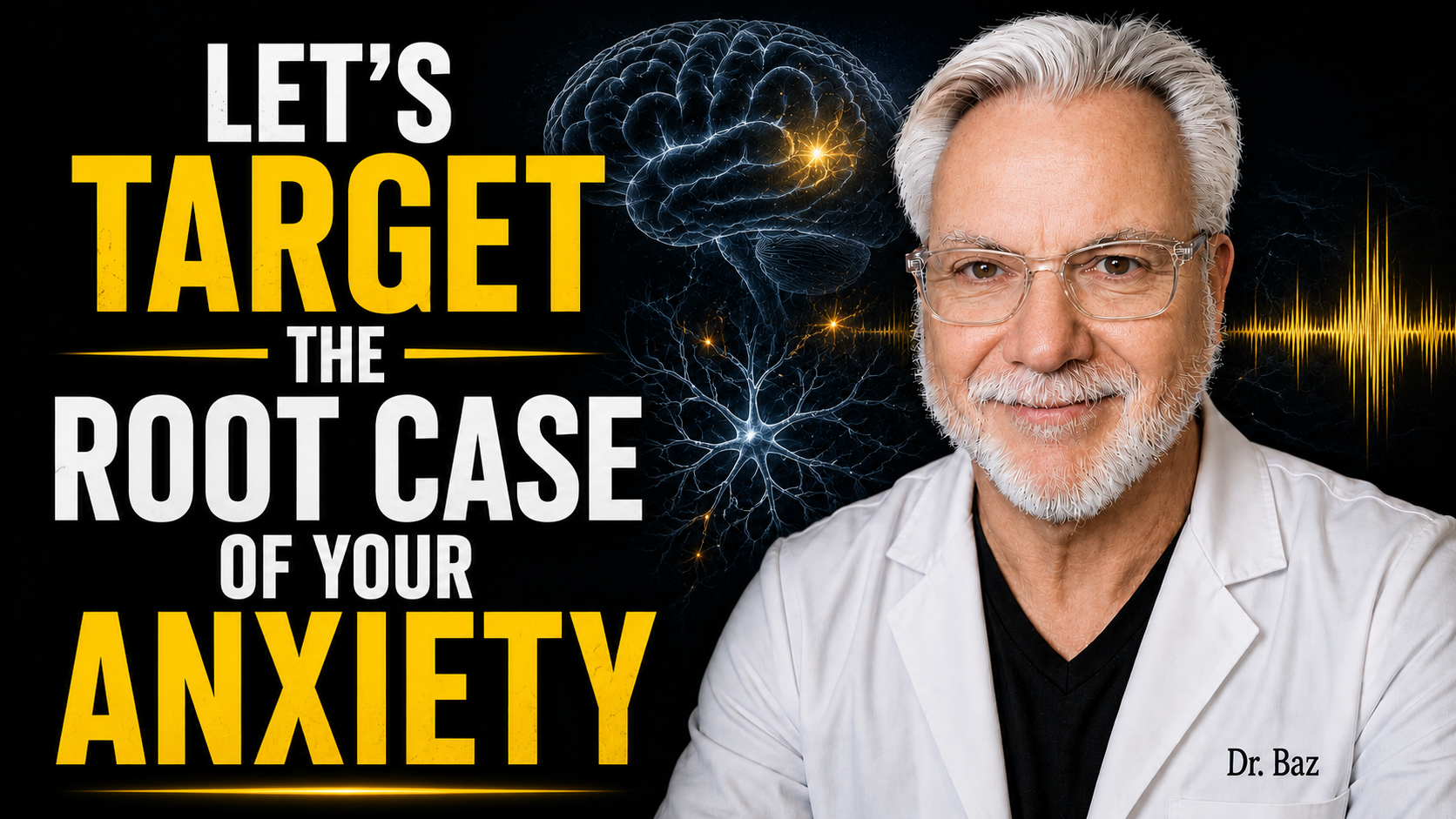
Since there isn’t a cure for anxiety, we need to target the root cause — our over-stimulated nervous system.

F.A.Q.s
Here are answers to the most frequently asked questions.
-
First and foremost, I also suffer from anxiety in many forms, and have for decades. As a former physician, I understand the pathophysiology of anxiety and as an educator, I’m able to break down the complex psychological mechanisms into easily understood ideas that makes sense.
-
I provide a service that solves a painful set of problems, just like your dentist does. Just as your dentist doesn’t run a dental charity, I charge a nominal fee for for my services. If you’re shopping for a bargain, then we won’t work well together. The fees I charge are appropriate.
-
Most people experience the results they seek within the allotted 4-week timeframe. However, if you’d like to remain a client beyond that, we can discuss it as we approach the end of your commitment.